

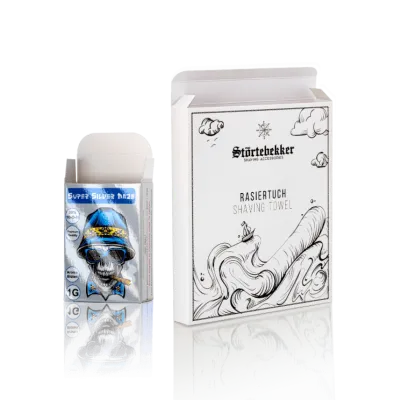
 Folding boxes
 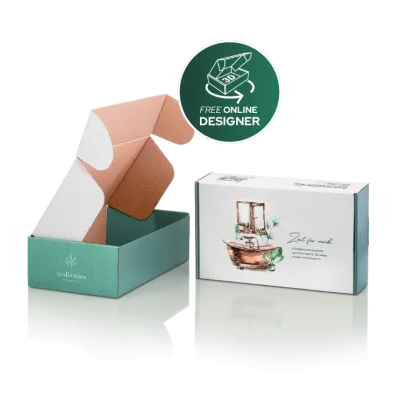 Shipping boxes
 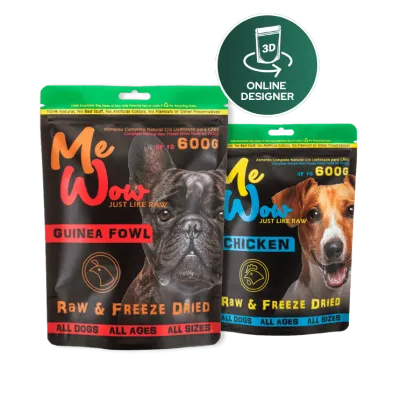 Stand-up pouch
  Flexible packaging
  Labels
  Paper cans
  Sample boxes
 Polyethylene terephthalate (PET) is a dimensionally stable, highly printable type of plastic that is primarily used as a printing and outer film in flexible packaging. Its excellent thermal stability in particular enables high mechanical loads and ensures dimensionally stable repeats over long print jobs.
Film types & applications
- Biaxially oriented PET (BOPET/OPET) is primarily used as a printing and outer layer in digital, flexographic and gravure printing. Typical film thicknesses are 12–23 µm. The films are available in glossy and matt (outer side) finishes.
- White/opaque PET films are mainly used for applications requiring special appearance and opacity. Typical film thicknesses are 12, 18, 23, 36 and 50 µm.
- When used as printing film, PET films are mainly printed in reverse (mirror-inverted on the reverse side). The required sealing medium (e.g. PE or PP) is then laminated to the inside of the PET film.
Properties
Compared to PE and PP, PET is significantly stiffer and, above all, much more thermally stable (low shrinkage & optimum dimensional stability). Furthermore, PET is not sealable and, with the aid of heat stabilisers, heat shrinkage can be reduced to as little as 0.1%. PET also offers very good transparency (low haze) and is on a similar level to BOPP.
Recycling
For flexible packaging, the recyclability of PET-based structures depends on the complete packaging structure, the intended recycling route and the available recycling infrastructure. PET is widely used for applications such as bottles and textiles. However, PET films in FlexPack applications are frequently used in multilayer composites with PE or PP, for example PET/ALU/PE. Such multilayer structures may have limited suitability for conventional mechanical recycling where the individual material layers cannot be adequately sorted or separated.
Sources as of 25 January 2025:
- Mitsubishi Polyester Film (HOSTAPHAN): weiße/opake PET-Folien, Dicken;
- ScienceDirect (Retort Pouches Overview): Außenlage Polyester als druck-/hitzebeständige Lage; innere PP-Siegelschicht;
- Resources, Conservation & Recycling (Soares et al.): Recycling-Herausforderungen bei Multi-Material/Multilayer-Verpackungen