


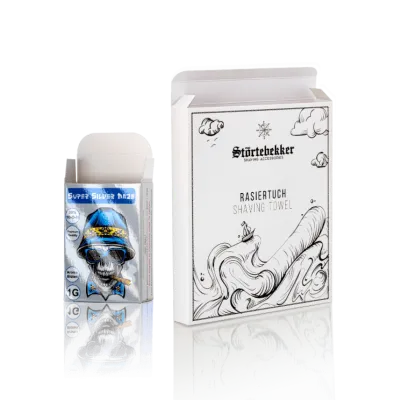
 Folding boxes
 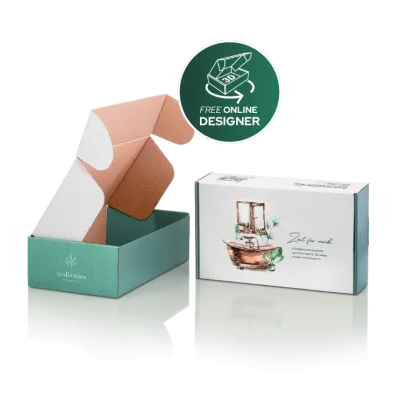 Shipping boxes
 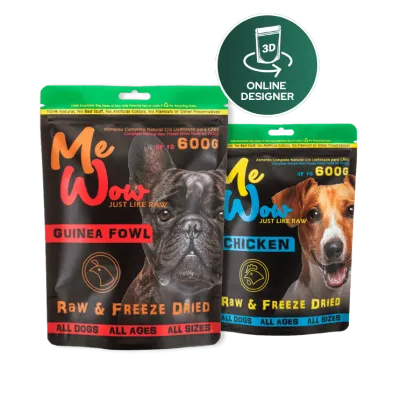 Stand-up pouch
  Flexible packaging
 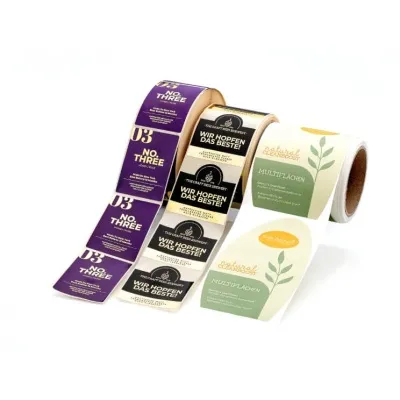 Labels
 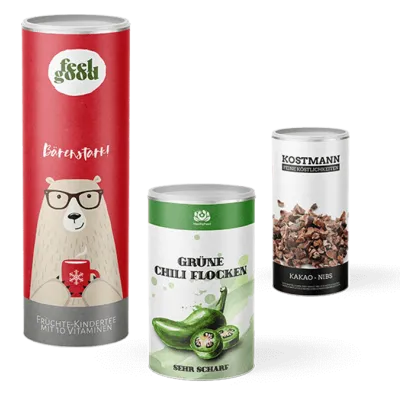 Paper cans
  Sample boxes
 To ensure the shelf life of sensitive products such as food or pharmaceuticals, they must be protected against various environmental influences. To provide this level of protection, simple PP or PE films are not sufficient; so-called functional barriers are required. Depending on the barrier used, these protect the product to varying degrees against oxygen, water vapour, aroma loss and UV radiation.
We will not go into detail here about exactly how a functional barrier works. For that, a separate guide on barrier films is available.
Aluminium, metallisation, AlOx & EVOH – a comparison
In the following table, we compare the most common barrier types and also highlight the specific aspects that should be considered.
Legend: — = none/negligible | ★ = low | ★★ = medium | ★★★ = high | ★★★★ = ultra-high
Taking recyclability and design for recycling into account, it is advisable to avoid aluminium barriers wherever possible if a mono-material approach (PE/PP) is the priority. A highly effective alternative today is metallised barrier solutions in the UHB segment (Ultra High Barrier): in many applications, they achieve very high barrier performance as an aluminium substitute and can – particularly in PP mono-structures and where the metallisation is on the inside or not visibly reflective on the outside – be materially recycled or classified as recyclable, depending on the overall structure and the assessment system. If maximum barrier performance across the full spectrum is not required, especially for light/UV protection, an AlOx barrier is often a sensible choice: it offers very high OTR/WVTR while remaining transparent and is usually the cleanest option from a DfR perspective in polyolefin mono-material streams, provided no additional problematic coatings are used. In the food sector, EVOH barriers are also widely used: they provide a very high oxygen and aroma barrier, while water vapour protection is generally ensured in practice by PE or PP outer layers within the laminate structure. EVOH should therefore be positioned within the laminate so that it is protected from moisture.
- Sources as at 30 March 2026:
- RecyClass Dfr-Guidelines;
- SVC (AlOx-Barriereschichten: hohe Barriere, Prozess-/Stresssensitivitäten);
- CEFLEX NIR-Tests (Einfluss der Oberfläche/metallisierter Optik auf Sortierbarkeit),
- ILSI Europe Report (OTR/WVTR-Einordnung: metallisierte OPP, EVOH; Feuchteabhängigkeit EVOH).
- Journal of applied packaging research (Influence of Pinholes on Water Vapor and Oxygen
Permeation of Packaging Foil and Films)