

 Folding boxes
  Shipping boxes
 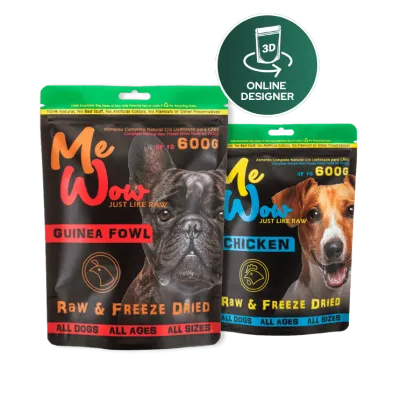 Stand-up pouch
  Flexible packaging
  Labels
 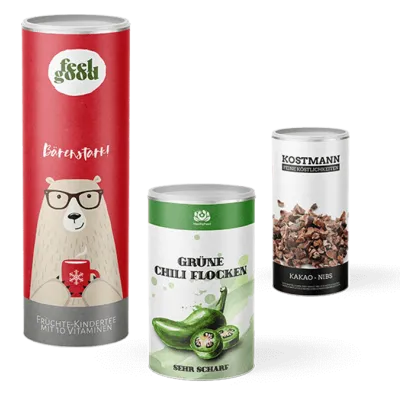 Paper cans
  Sample boxes
 More quality, better recycling, less waste
WHY NEW STANDARDS ARE NEEDED
The demand for plastics is still high; after all, they can be used in every area of life. The numbers are also high when we look at production. According to the study 'Material flow analysis plastics in Germany 2019' (Conversio Market & Strategy, August 2020), the plastics processing industry in Germany used 14.2 million metric tons of plastics in 2019, around 12.3 million metric tons of which were virgin materials. Recyclates accounted for 13.7 percent of the volume processed – including recyclates from production waste. By contrast, the proportion of recyclates, in other words reprocessed plastics, was still below 14 percent. There are economic reasons for this:
- The production of high-quality recyclates that can be further processed into equally high-quality products is relatively expensive.
- Recyclates therefore cost around 25 percent more than virgin plastics. • So-called energy recovery, in other words burning plastics to generate energy, is therefore more beneficial. According to the same study, almost 53 percent of the plastic waste generated in Germany in 2019 – around 3.3 million metric tons – was sent to energy recovery and thus not recycled.
In order to generally increase the share of recycled plastics, higher rates for mechanical recycling and for the use of recycled materials in production have been established at the legislative level - both at the federal level and in the EU. For the time being, this does not change the frequently poor quality of the recyclates. A new DIN standard is now to ensure the necessary improvements in this area.
FINALLY UNIFORM STANDARDS
One advantage of plastics that becomes a disadvantage in recycling, however, is the great variety of different types of polymers. In order to be able to separate these for reprocessing, the data in the recycling process has been missing until now. This in turn results in varying material quality - not good conditions for producing equal or even higher-quality products from the recyclates.
This is where the new DIN SPEC 91446 on "Classification of plastic recyclates by data quality levels for use and (internet-based) trade" comes in. Work on the new standard began in summer 2020, and it has been available for use since December 2021. A consortium of a total of 16 experts from industry and research was involved in the development of the uniform regulations. With their respective expertise, they cover the entire value-added cycle, from sorting to trading in the recyclates.
This is where the new DIN SPEC 91446 on "Classification of plastic recyclates by data quality levels for use and (internet-based) trade" comes in. Work on the new standard began in summer 2020, and it has been available for use since December 2021. A consortium of a total of 16 experts from industry and research was involved in the development of the uniform regulations. With their respective expertise, they cover the entire value-added cycle, from sorting to trading in the recyclates.
There are good reasons why it remains "only" a standard for the time being and no norm has yet been created:
- The standardization process for a DIN SPEC can basically be initiated by anyone.
- The DIN SPEC can theoretically also be published without a consensus requirement. Three involved parties are obligatory, but they do not have to consider all interest groups. This speeds up the process.
- Publication is faster compared to a DIN NORM. This means that uniform standards and regulations can be established on the market earlier.
Apart from this, there is still the possibility of converting the DIN SPEC into a DIN NORM. A corresponding application has been made to create a standard valid throughout Europe on the basis of standardization.
However, the present DIN SPEC 91446 already closes previous standardization gaps in its current form. Until now, fixed standards existed only for PE, PP, PS, PET and PVC plastics. But these are on the one hand material-specific and on the other hand not complete. It is freely available and can therefore be applied from trading platforms to politics.
MORE DATA DEPTH, BETTER IDENTIFICATION, MORE EFFICIENT CYCLES
With clear, uniform definitions, DIN SPEC 91446 is intended to help simplify communication between players along the value chain - in the future, they can build on the same foundations. Misunderstandings about material classifications or certain terminology are thereby excluded.
For this purpose, the standard contains the following regulations:
For this purpose, the standard contains the following regulations:
- It specifies the quantity and quality of data required to be able to classify materials. This also includes a system for classifying the various plastic recyclates on the basis of data depth. It consists of four data quality levels of varying scope that help with classification.
- It also contains definitions for clear labeling of recyclates as well as recycled content in plastic materials.
- There are also clear definitions for terms for which uniform regulations have been lacking up to now or which are used in different ways. This applies to input materials, recycling processes and plastic recyclates as materials.
Overall, DIN SPEC 91446 is intended to help improve the recycling of plastics - with the aim of obtaining recyclates in greater quantities from secondary raw materials and making them available for production in the desired high quality.